Rosings
Rosings Park, the imposing Kent residence of Lady Catherine de Bourgh, stands as the novel's most concentrated emblem of inherited rank, unearned authority, and the oppressive weight of aristocratic expectation. It is the physical and social stage on which Elizabeth Bennet's visit to her friend Charlotte Collins unfolds, and, more decisively, the location of Fitzwilliam Darcy's first, mortifying proposal and the subsequent letter that begins to dismantle Elizabeth's prejudices. The estate's grandeur, its mistress's dictatorial manner, and the rituals of deference it enforces all serve to crystallize the novel's central tensions between pride, prejudice, and genuine worth.
Setting and Description
Rosings is a handsome modern building, well situated on rising ground, with a park that provides a pleasant half-mile walk from the Hunsford Parsonage. The house itself is furnished with a splendour that Elizabeth, after seeing Pemberley, privately judges to be gaudy and uselessly fine, lacking the real elegance of Darcy's ancestral home. The grounds include a large and well-laid-out garden at the Parsonage, from which an opening in the trees affords a prospect of Rosings itself. The estate's scale is emphasized by Mr. Collins's awed enumeration of the windows in the front of the house and the original cost of the glazing, a detail that leaves Elizabeth unaffected. The dining-room at Rosings is exceedingly handsome, with all the servants and articles of plate that Mr. Collins had promised, and the chimney-piece alone in one of Lady Catherine's drawing-rooms cost eight hundred pounds.
Lady Catherine's Domain
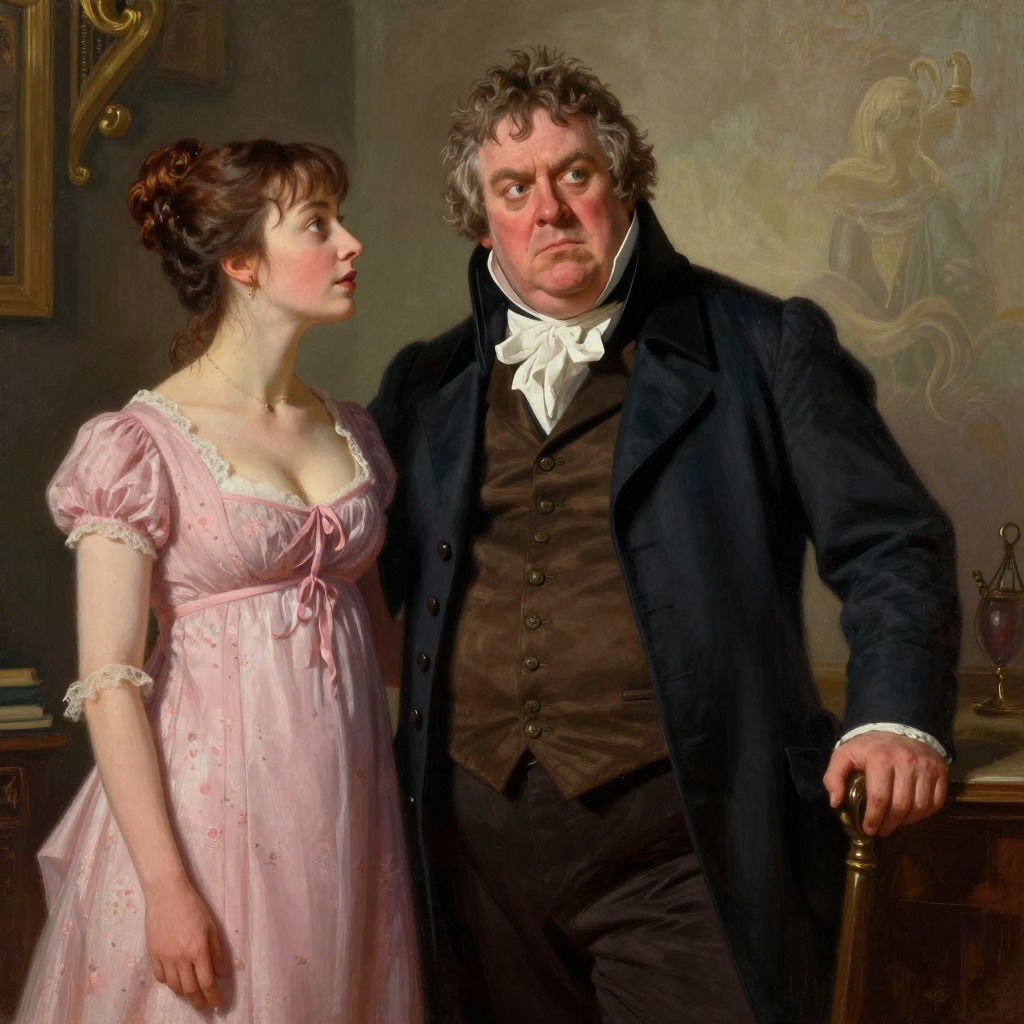
Lady Catherine de Bourgh is the absolute sovereign of Rosings. She is a tall, large woman with strongly-marked features and an authoritative tone that brooks no contradiction. She delivers her opinion on every subject in so decisive a manner as to prove she is not used to having her judgement controverted. She examines into the employments of her guests, looks at their work, and advises them to do it differently; she finds fault with the arrangement of the furniture and detects the housemaid in negligence. If she accepts any refreshment, she seems to do so only for the sake of finding out that Mrs. Collins's joints of meat are too large for her family. Though not in the commission of the peace, she is a most active magistrate in her own parish, sallying forth into the village to settle differences, silence complaints, and scold the cottagers into harmony and plenty. Her daughter, Anne de Bourgh, is a pale, sickly, insignificant young woman of a sickly constitution, who speaks very little and is entirely engaged in listening to Mrs. Jenkinson, who places a screen in the proper direction before her eyes. Lady Catherine has long planned that Anne should marry her nephew, Darcy, a scheme she treats as a tacit engagement.
Events at Rosings
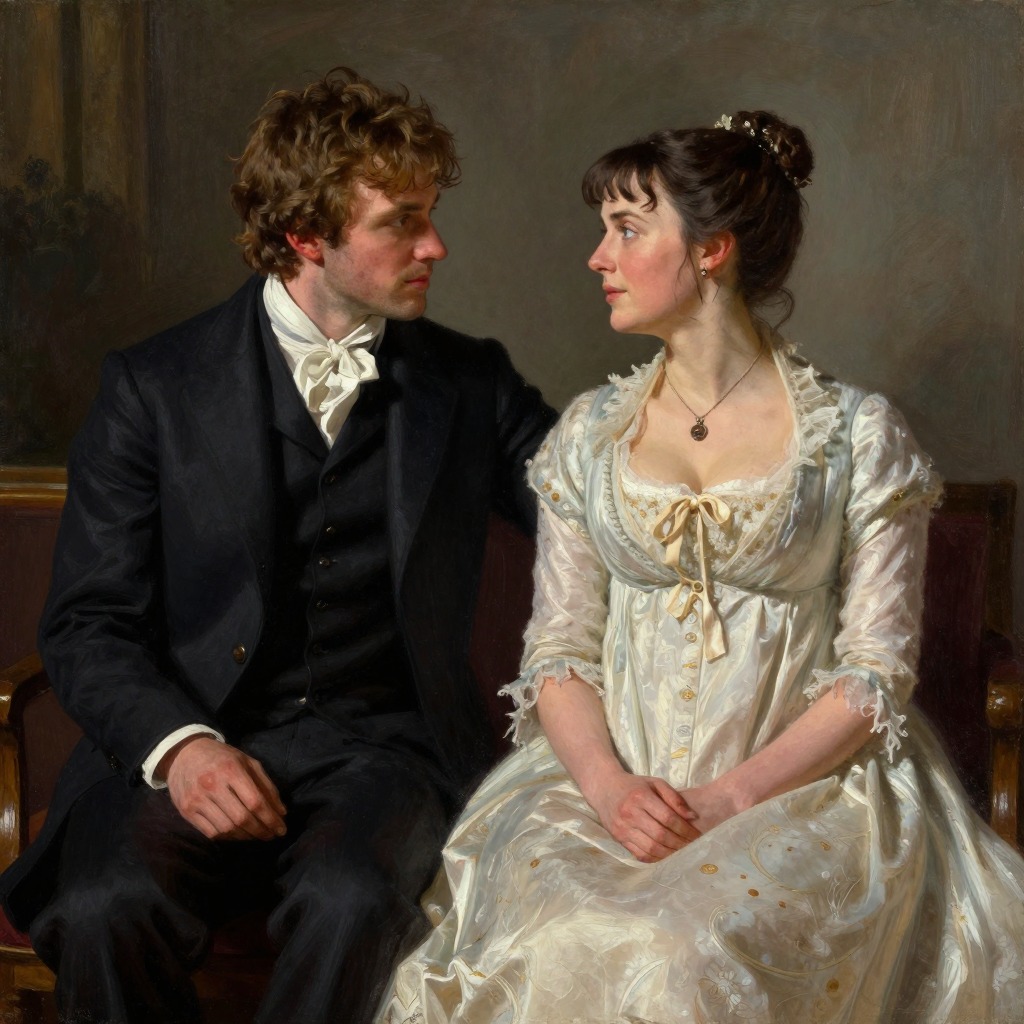
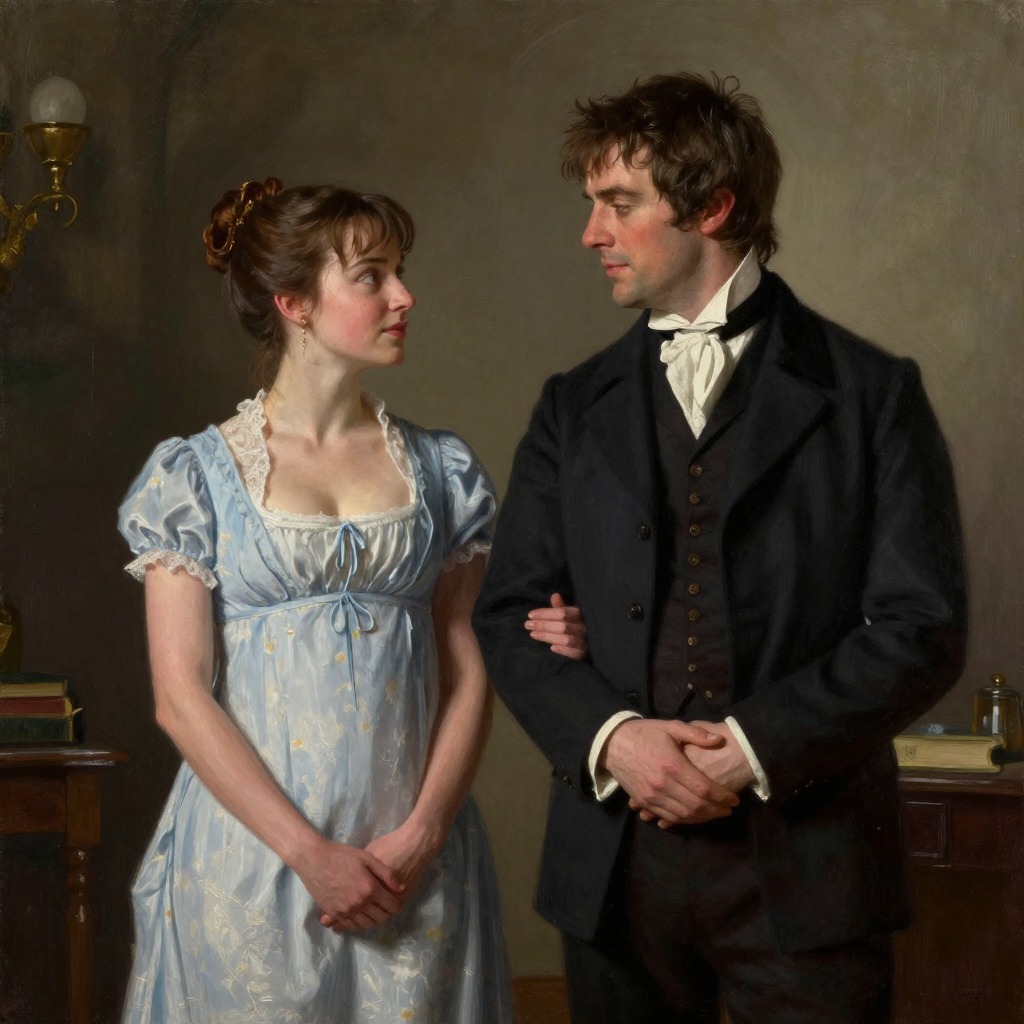
Elizabeth's visit to Hunsford is punctuated by regular, formal engagements at Rosings. She dines there nine times and drinks tea there twice during her six-week stay. The dinners are exceedingly handsome, but the conversation is dominated by Lady Catherine's monologues. Elizabeth is seated between Charlotte and Miss de Bourgh, the latter of whom says not a word to her all dinner-time. After dinner, Lady Catherine inquires into Charlotte's domestic concerns, gives her advice on the management of her cows and poultry, and questions Elizabeth impertinently about her education, her sisters, and her age. The evenings are spent at quadrille and cassino, with Lady Catherine generally speaking, stating the mistakes of the other players, or relating anecdotes of herself. It is during one of these evenings that Elizabeth plays the pianoforte, and Darcy, standing near her, engages in a witty exchange about her performance and his own character. The most significant event at Rosings is Darcy's first proposal to Elizabeth in the Hunsford Parsonage, but the emotional and social pressure that leads to that moment is built entirely within the orbit of Rosings, where Darcy's aunt's condescension and Elizabeth's defiance of it create the charged atmosphere.
Narrative and Thematic Significance
Rosings functions as a negative foil to Pemberley. Where Pemberley is described as having natural beauty counteracted by an awkward taste, Rosings is a place of enforced grandeur and artificial display. The housekeeper at Pemberley, Mrs. Reynolds, speaks of Darcy with genuine affection and respect, while the servants at Rosings are merely part of the spectacle. Elizabeth's visit to Rosings confirms her worst suspicions about the arrogance of the wealthy, but it also provides the setting for Darcy's letter, which forces her to re-evaluate everything she thought she knew. The estate is also the source of the rumour that reaches Lady Catherine about Elizabeth's supposed engagement to Darcy, prompting her furious journey to Longbourn. In the end, Lady Catherine's attempt to prevent the marriage by invoking the pollution of Pemberley's shades backfires, as her interference gives Darcy the hope he needs to propose again. Rosings, therefore, is not merely a location but a nexus of pride, prejudice, and the social forces that both separate and ultimately unite Elizabeth and Darcy.